
The Sokörpe Skin Care Science library explains the biology and chemistry behind modern skincare ingredients. This section answers the most common skincare science questions about Vitamin C, retinoids, hyperpigmentation, hydration, wrinkles, anti-aging skincare, pigmentation, skincare routines and formulation science.
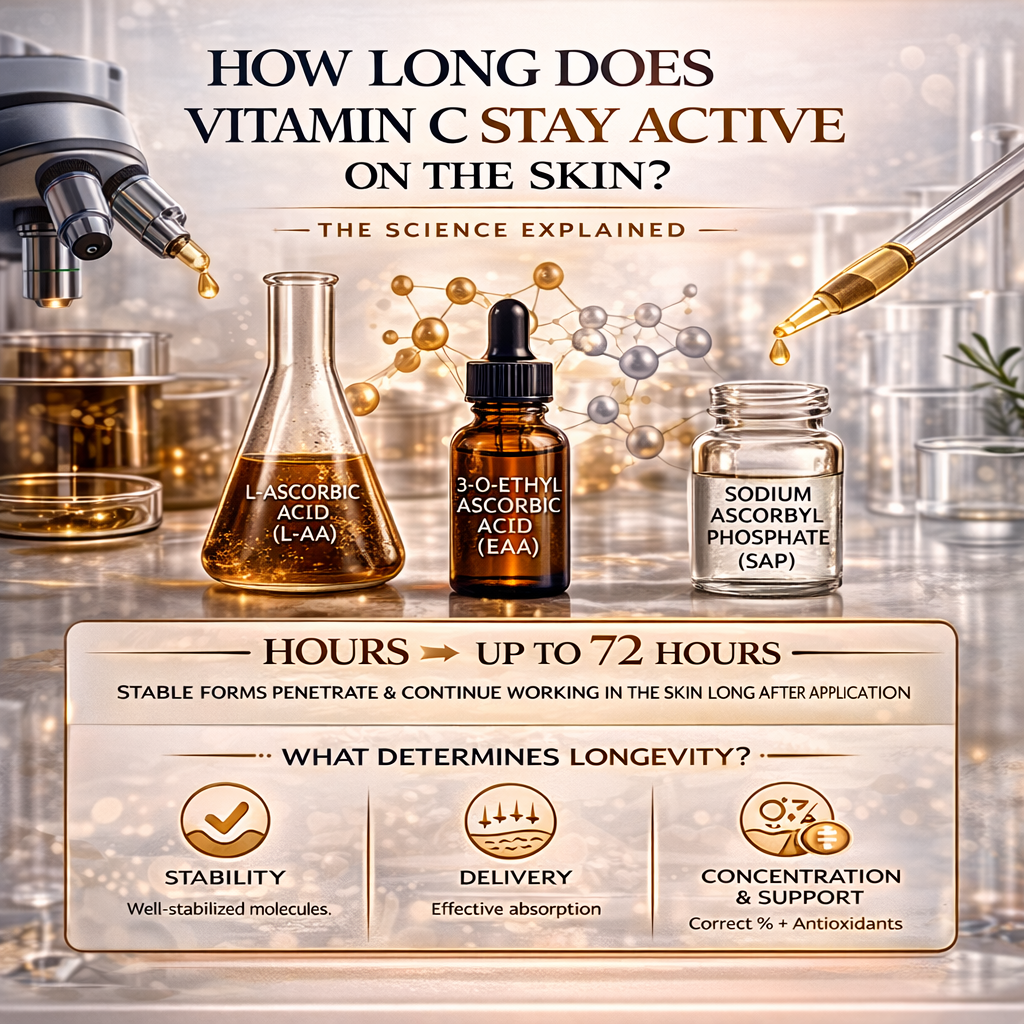
How Long Does Vitamin C Stay Active on the Skin? The Real Science Behind Its Lasting Power
The effectiveness of Vitamin C in skincare depends on its stability and how well it penetrates the skin. While some forms degrade quickly, advanced formulations can remain active and continue delivering benefits for up to 72 hours.
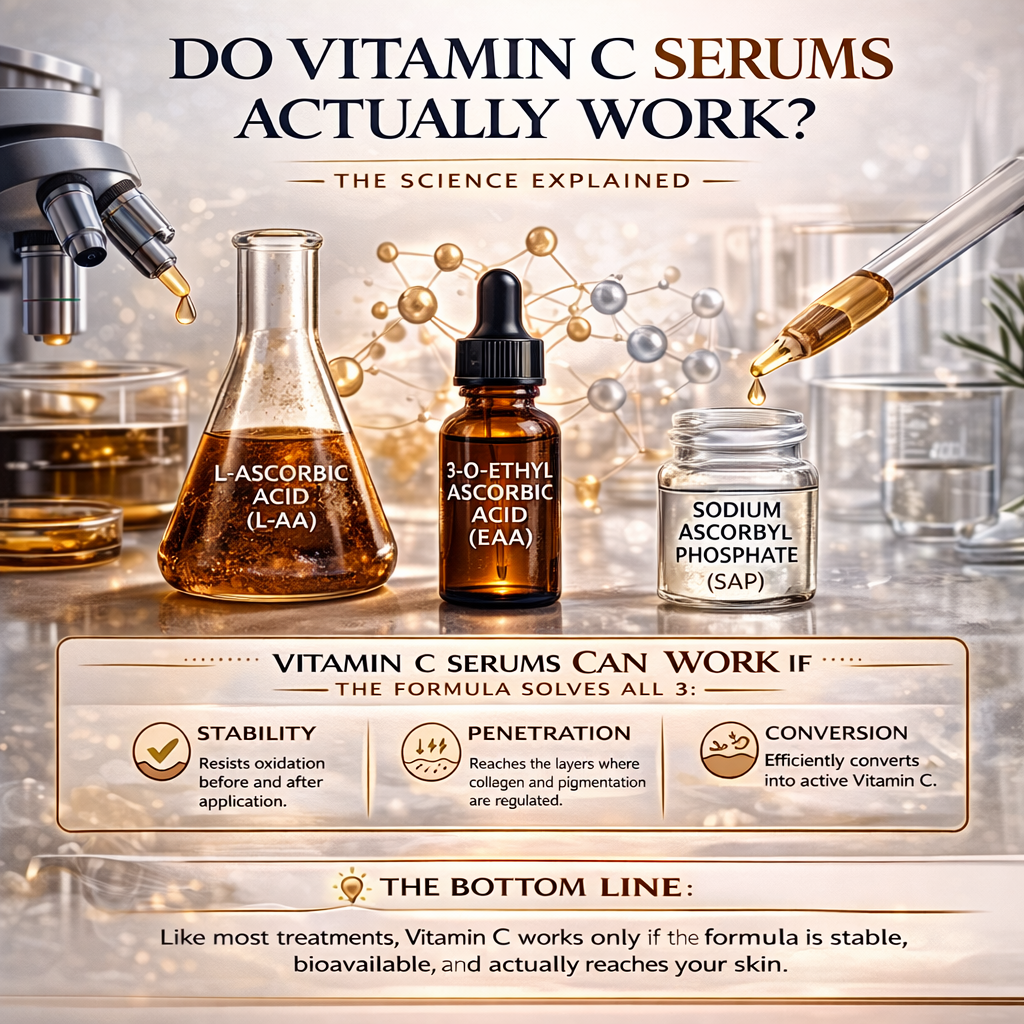
Do Vitamin C Serums Actually Work? The Science Explained (No Hype, Just Results)
Vitamin C serums can significantly improve skin tone, reduce dark spots, and support collagen—but only if the formula is stable and bioavailable. Many products fail because they oxidize quickly or never properly penetrate the skin.
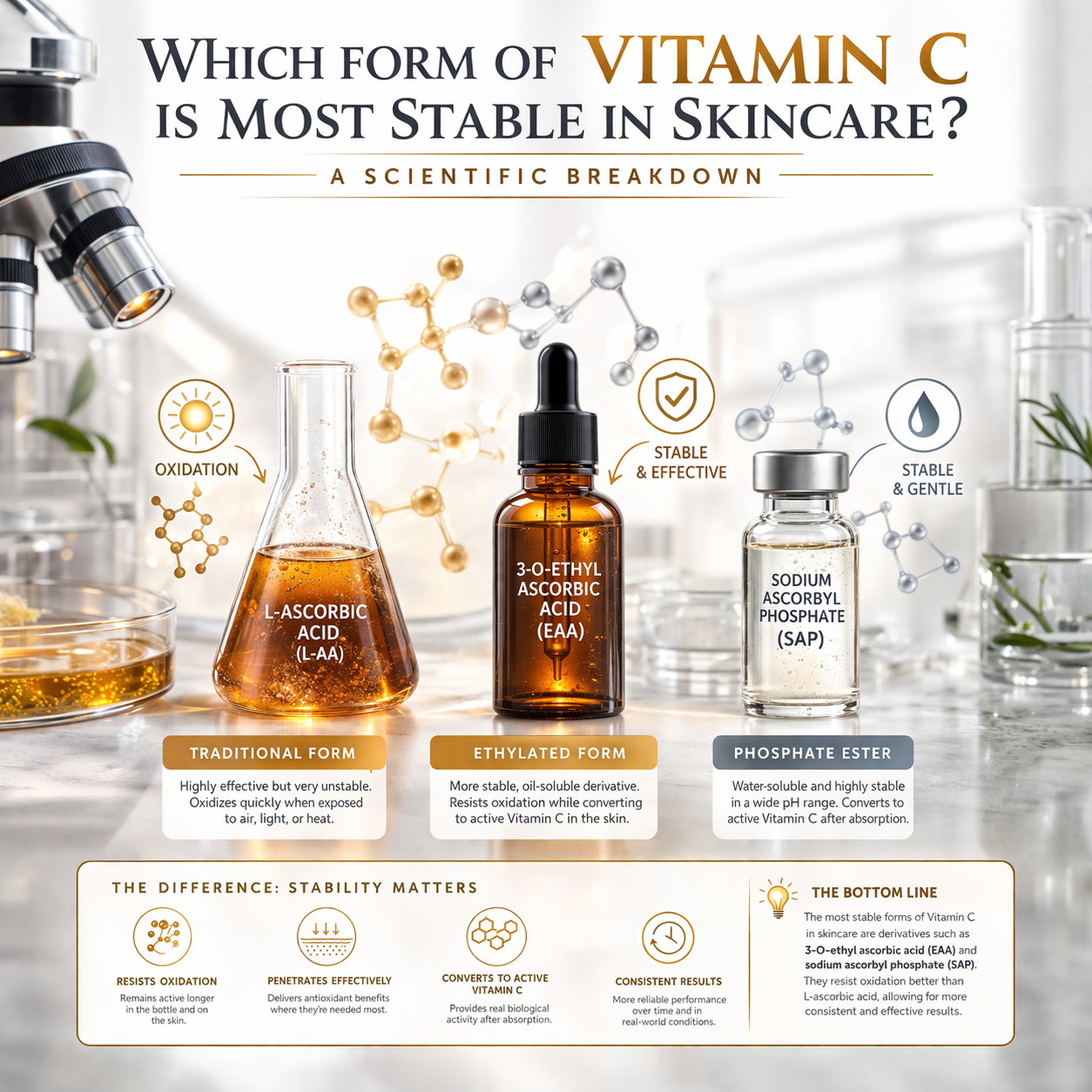
Which Form of Vitamin C Is Most Stable in Skincare? A Scientific Breakdown
Stable Vitamin C forms like 3-O-ethyl ascorbic acid and sodium ascorbyl phosphate resist oxidation better than traditional L-ascorbic acid. This stability allows them to maintain potency and deliver more consistent results in real-world skincare use.
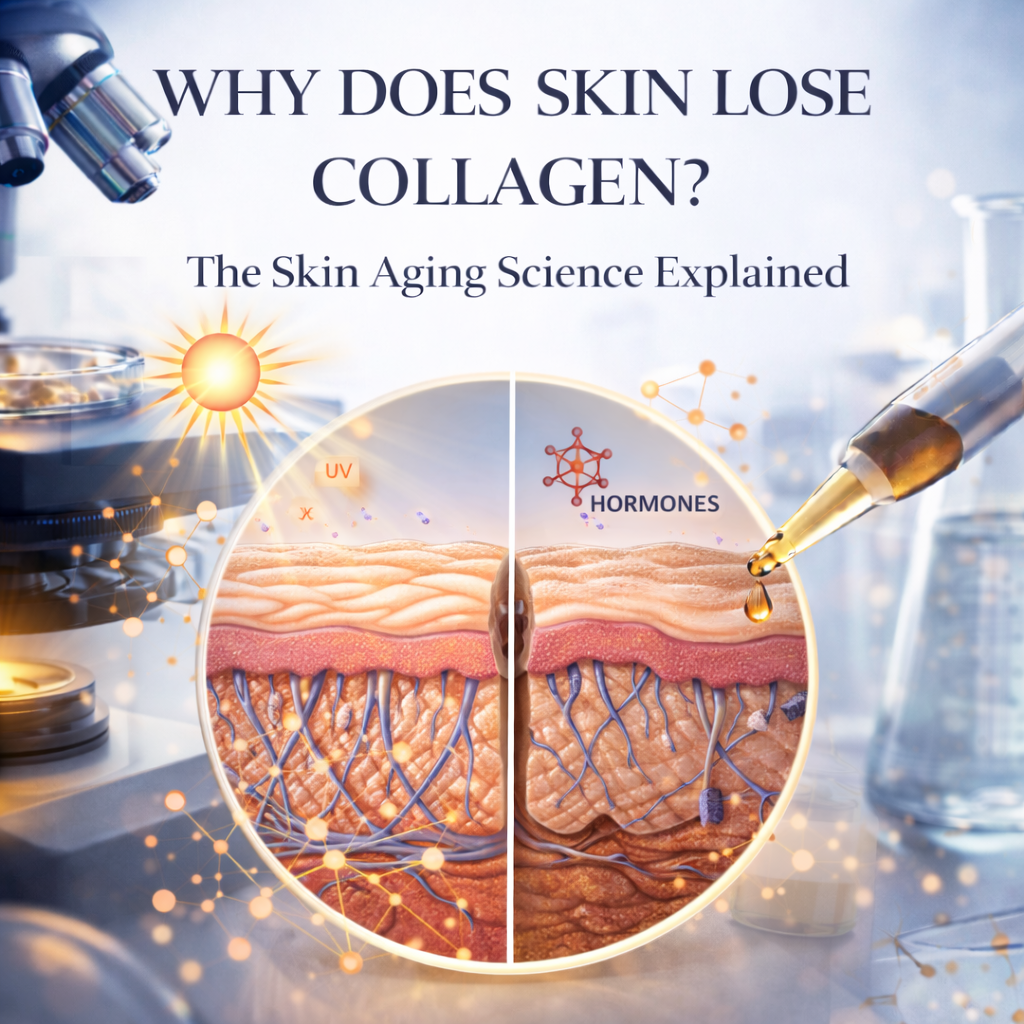
Why Does Skin Lose Collagen? The Skin Aging Science Explained
Collagen loss is one of the main biological processes behind skin aging. As collagen production slows and existing collagen fibers break down, the skin gradually loses firmness and elasticity. Sun exposure, oxidative stress, and natural aging all contribute to declining collagen levels.
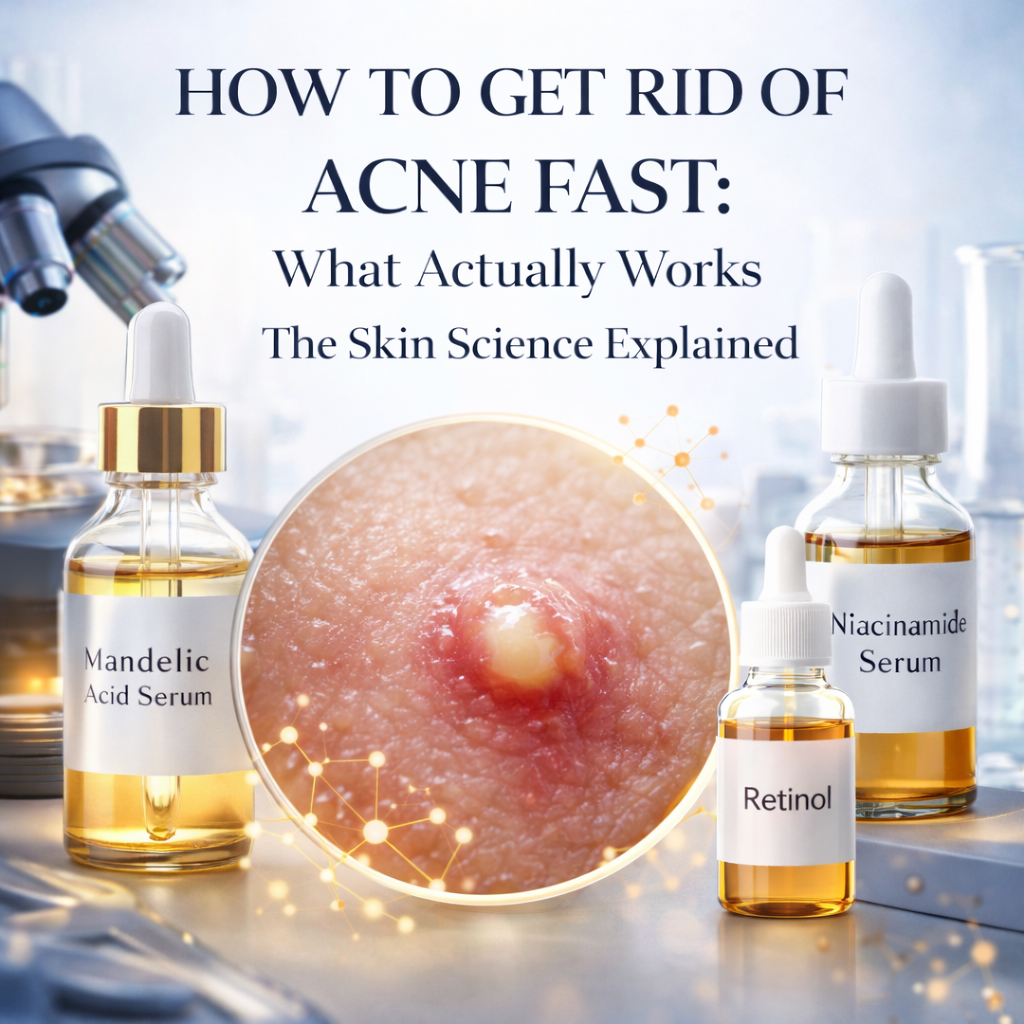
How to Get Rid of Acne Fast: What Actually Works (The Skin Science Explained)
Acne forms when pores become clogged with oil, dead skin cells, and bacteria. Reducing inflammation, keeping pores clear, and regulating oil production can help improve breakouts quickly. Targeted ingredients such as niacinamide, mandelic acid, and retinoids are commonly used in science-based skincare to support clearer skin.
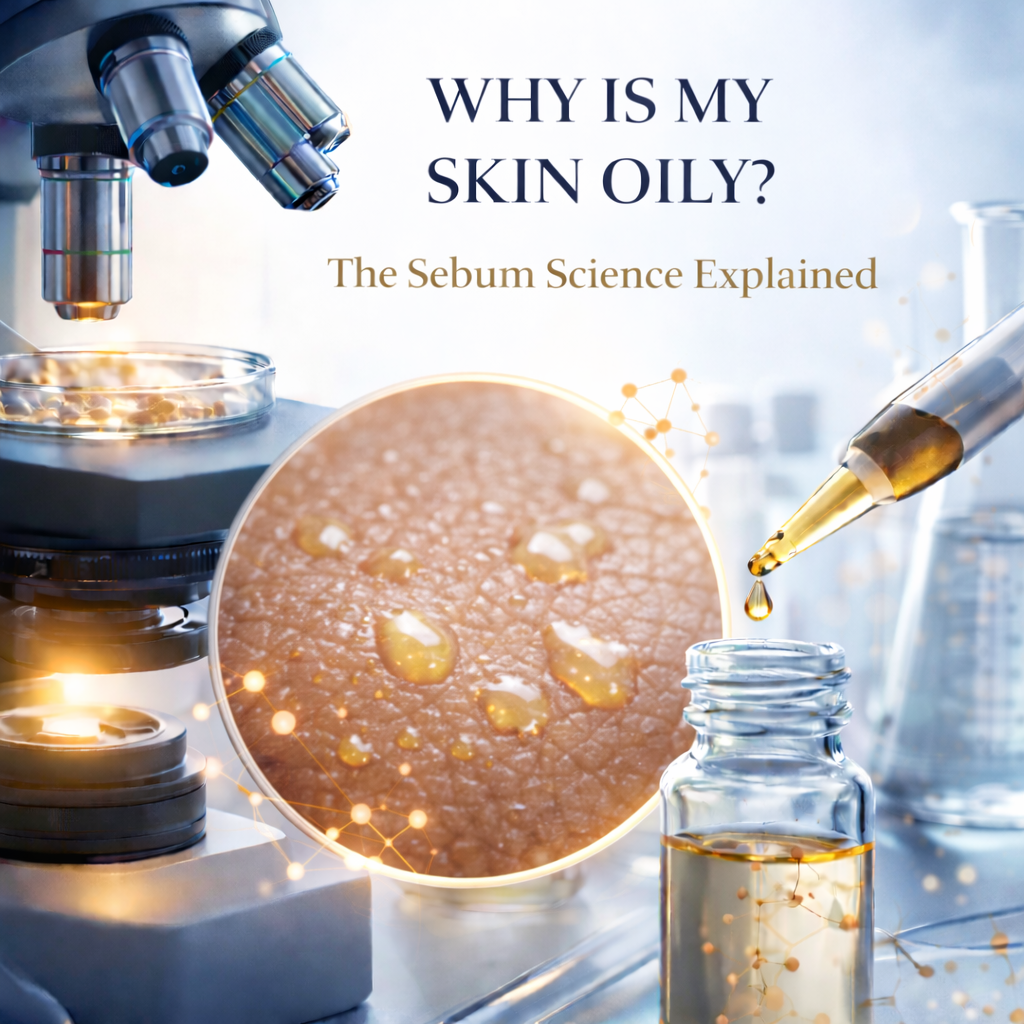
Why Is My Skin Oily? The Sebum Science Explained
Oily skin develops when sebaceous glands produce more sebum than the skin needs for protection and hydration. Hormones, genetics, climate, and skincare habits can all influence oil production and contribute to shiny skin and visible pores.
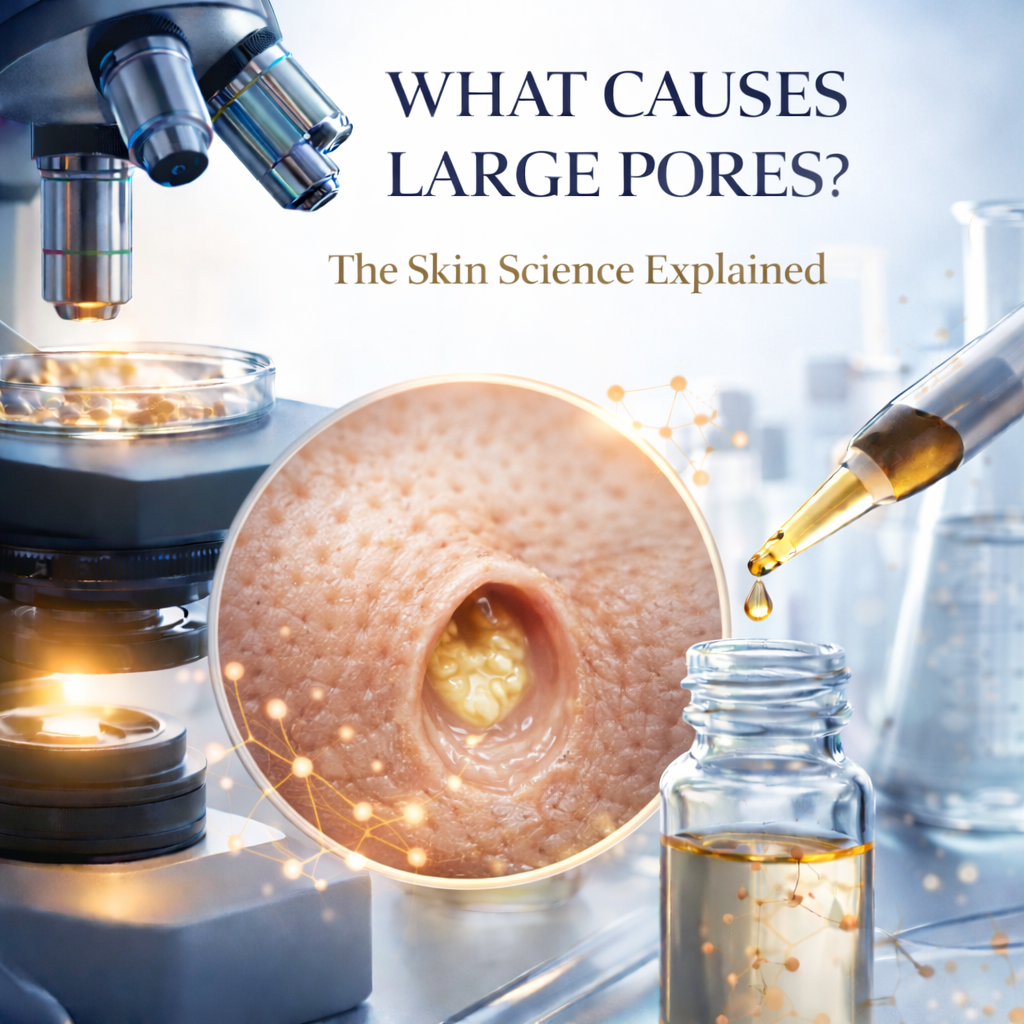
What Causes Large Pores? The Skin Science Explained
Pores do not open or close, but their appearance can change depending on oil buildup, skin structure, and collagen levels. Understanding how pores function helps explain why treatments focus on keeping pores clear and supporting skin elasticity rather than attempting to shrink them.
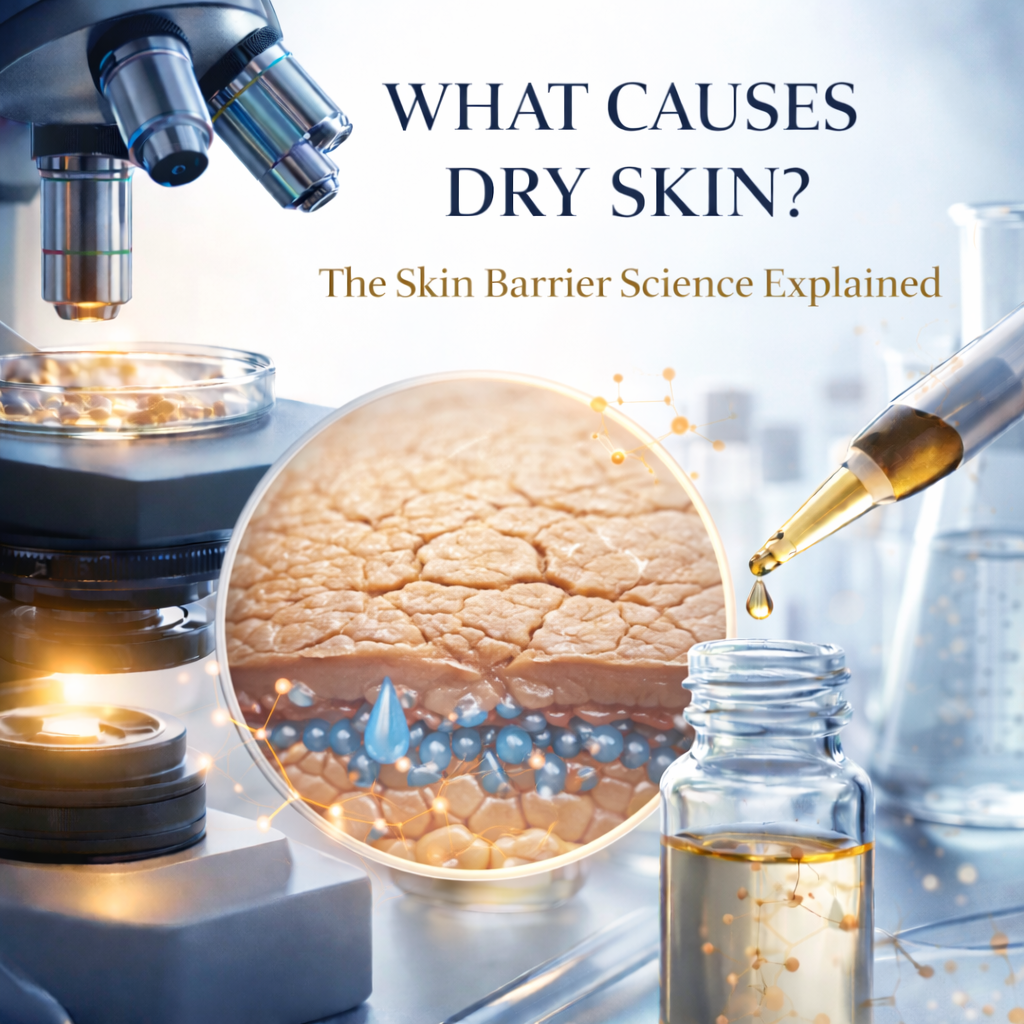
What Causes Dry Skin? The Skin Barrier Science Explained
Dry skin develops when the skin barrier loses its ability to retain moisture. Factors such as aging, environmental stress, harsh skincare products, and reduced lipid production can weaken the skin barrier and lead to dryness, irritation, and rough texture.
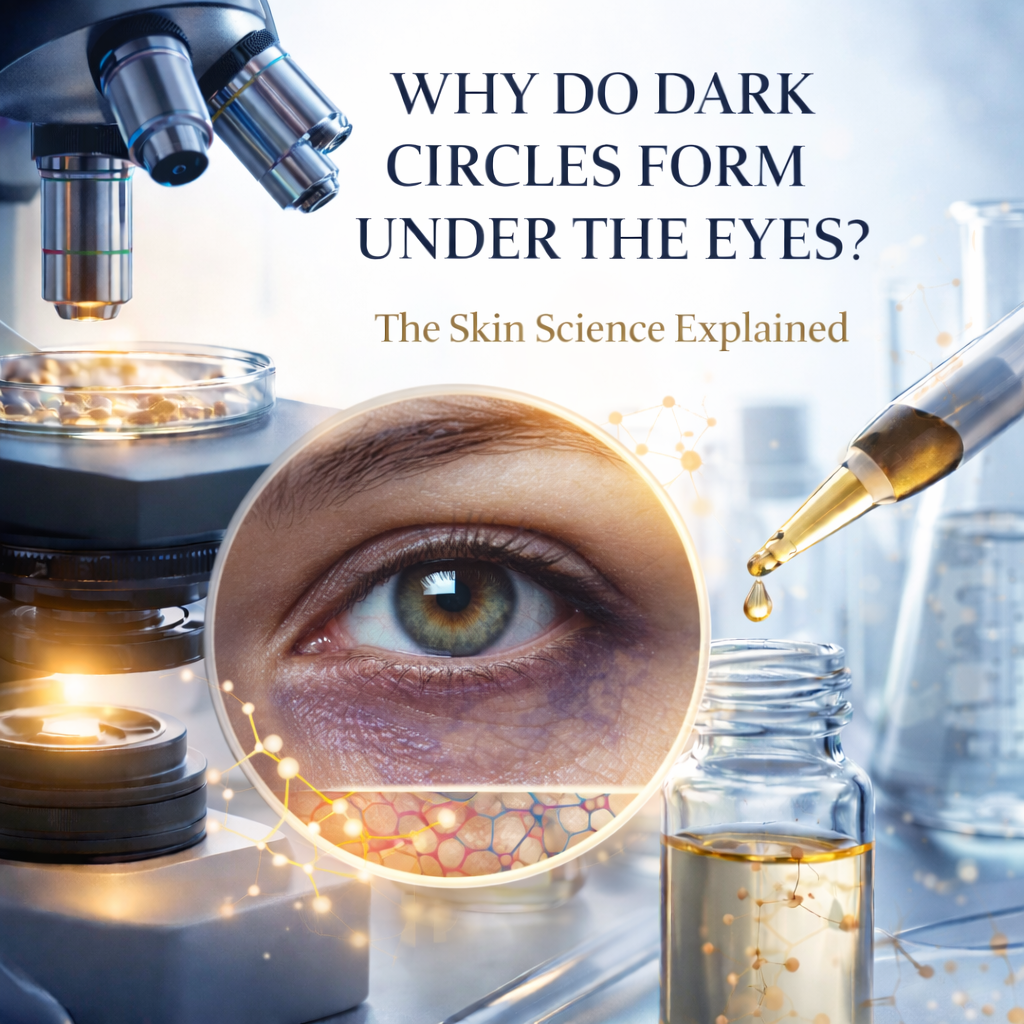
Why Do Dark Circles Form Under the Eyes? The Skin Science Explained
Dark circles under the eyes are commonly caused by thin skin, visible blood vessels, pigmentation changes, and loss of collagen. As skin ages and becomes thinner, underlying vascular structures become more visible, contributing to the appearance of under-eye darkness and shadows.
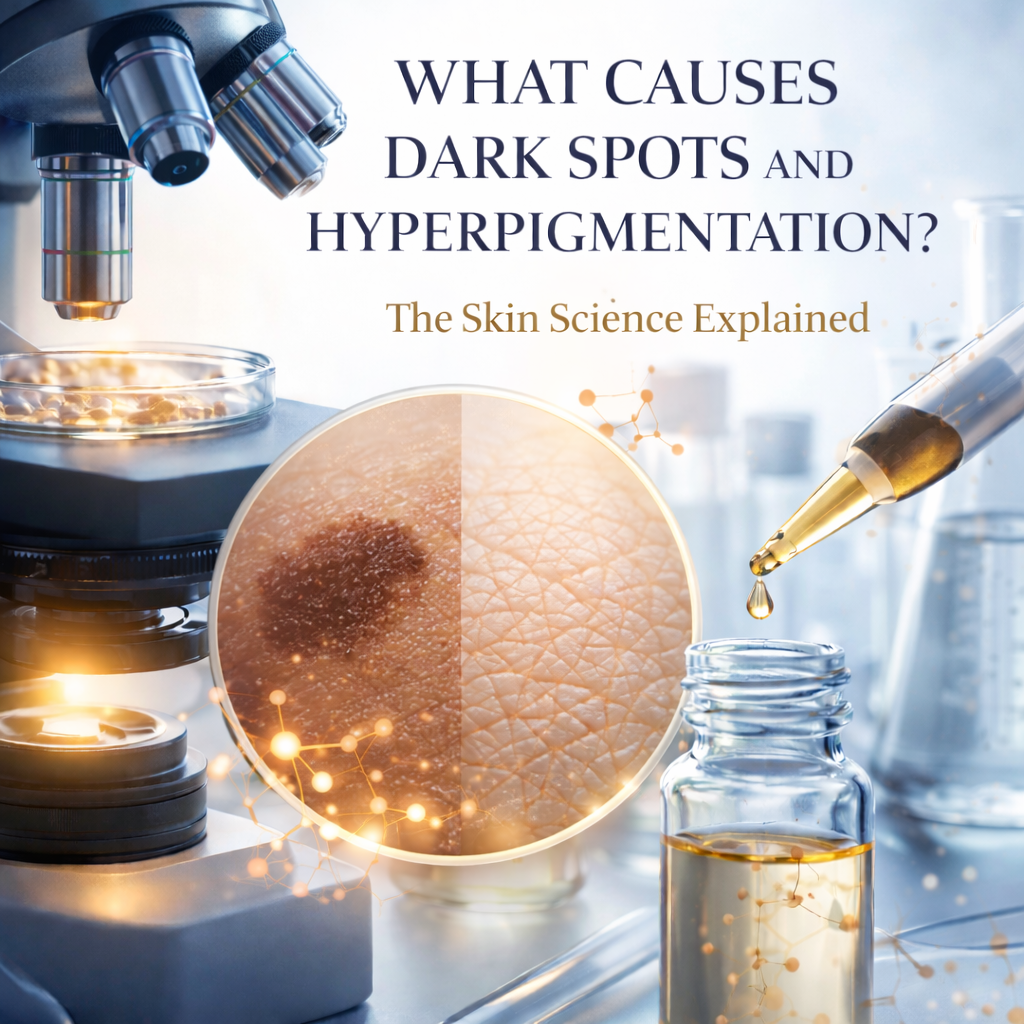
What Causes Dark Spots and Hyperpigmentation? The Skin Science Explained
Dark spots and hyperpigmentation form when excess melanin accumulates in certain areas of the skin. Sun exposure, inflammation, hormonal changes, and skin injury are among the most common triggers. Understanding the biological causes of hyperpigmentation helps explain why ingredients such as vitamin C, tranexamic acid, and retinoids are often used in science-based skincare.
Does Retinol Actually Work? The Science Explained
Retinol is one of the most studied ingredients in skincare. As a vitamin A derivative, it helps increase skin cell turnover and support collagen production. Dermatology research shows that consistent use of retinoid ingredients can improve skin texture, reduce wrinkles, and support healthier skin renewal.
What Causes Wrinkles? The Skin Aging Science Explained
Wrinkles develop when the skin loses collagen, elastin, and structural support over time. Sun exposure, oxidative stress, and natural aging all contribute to this process. Understanding what causes wrinkles helps explain why certain ingredients—such as retinoids, antioxidants, and barrier-supporting compounds—are commonly used in science-driven skincare.

What Does Dermatology Research Actually Say About Skincare? The Science Explained
Dermatology research has identified only a handful of skincare ingredients that consistently improve skin health and reduce visible aging. Retinoids, antioxidants, and barrier-supporting compounds are among the most studied ingredients for supporting collagen production, protecting the skin from environmental damage, and improving overall skin structure.
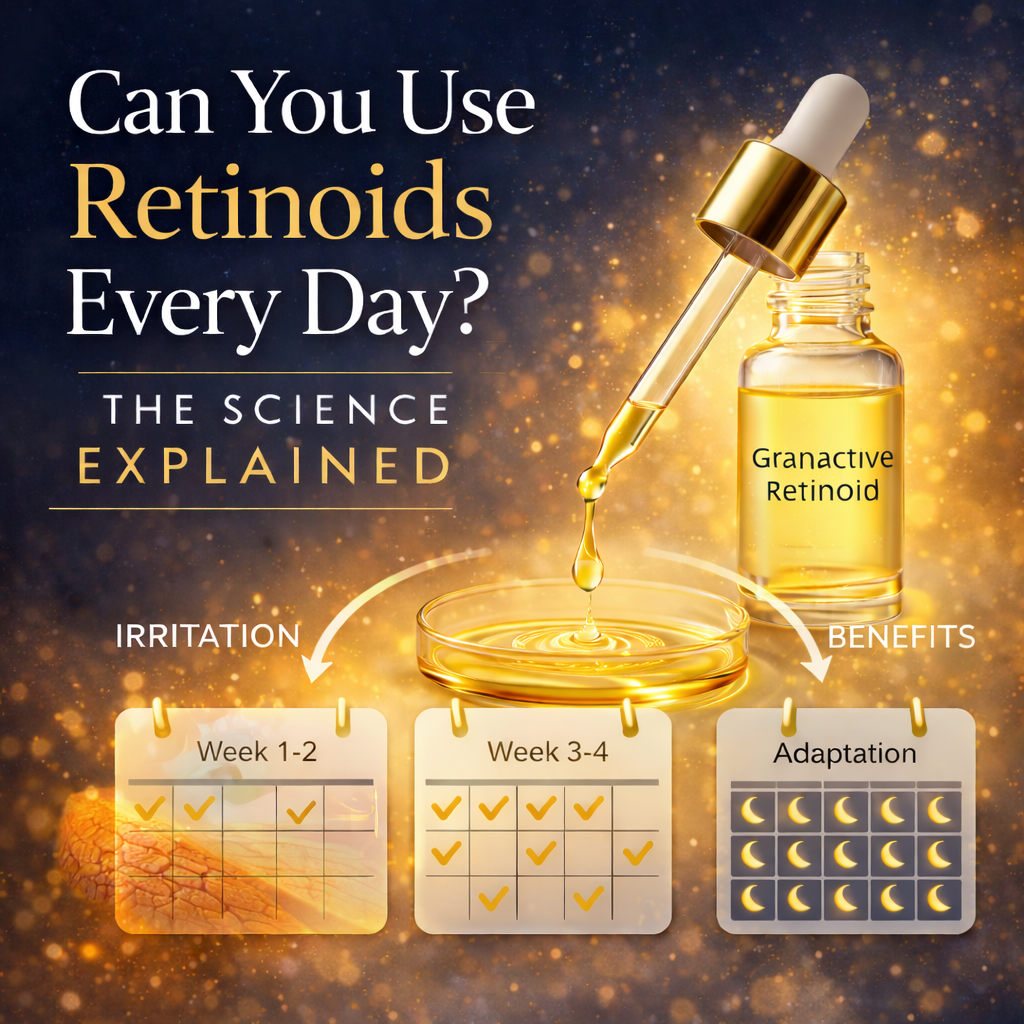
Can You Use Retinoids Every Day?
Retinoids can often be used daily, but most dermatology recommendations suggest introducing them gradually to allow the skin to adapt. Starting two to three times per week and increasing frequency over time may help minimize irritation while still supporting collagen production, skin cell turnover, and improved skin texture.
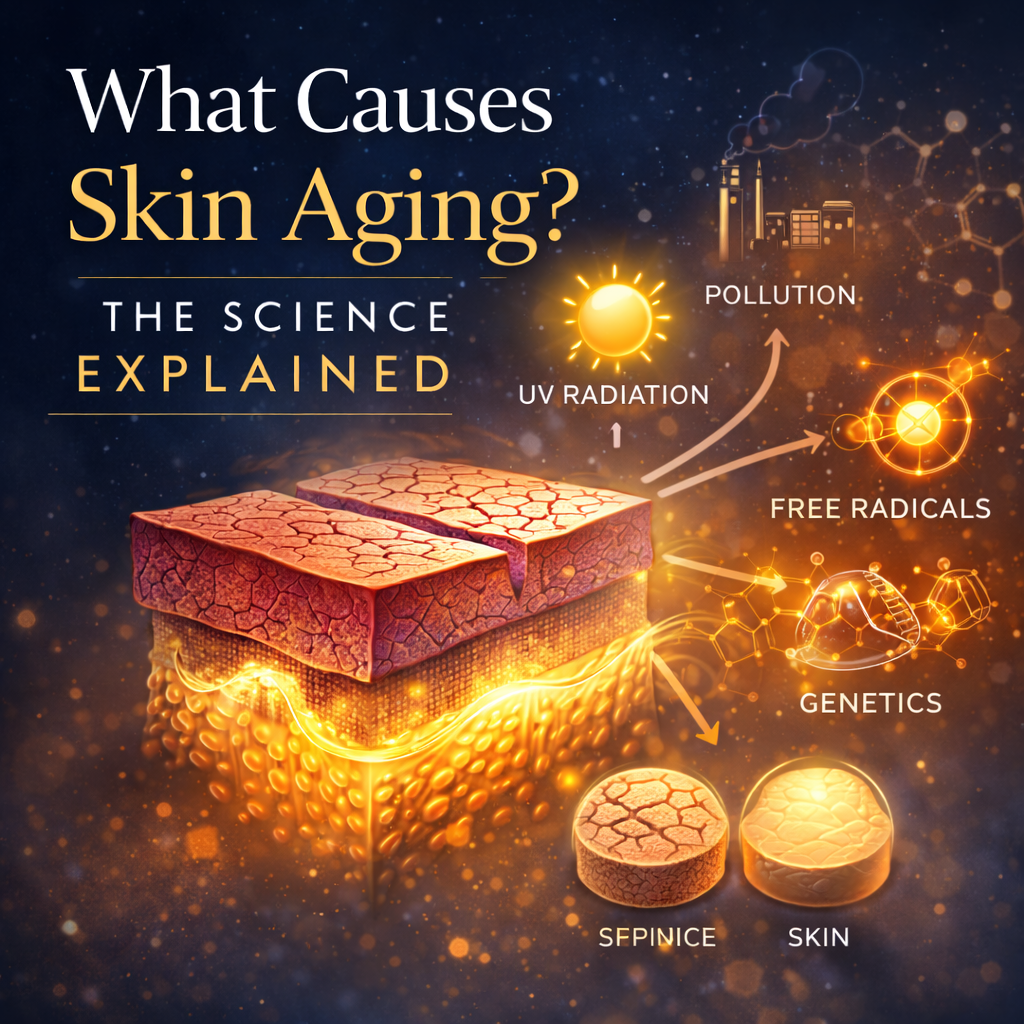
What Causes Skin Aging? The Science Explained
Skin aging occurs through a combination of intrinsic biological processes and external environmental factors such as ultraviolet radiation, pollution, and lifestyle influences. These processes gradually reduce collagen production, slow skin cell turnover, and weaken the skin barrier, contributing to wrinkles, uneven pigmentation, and loss of skin elasticity.
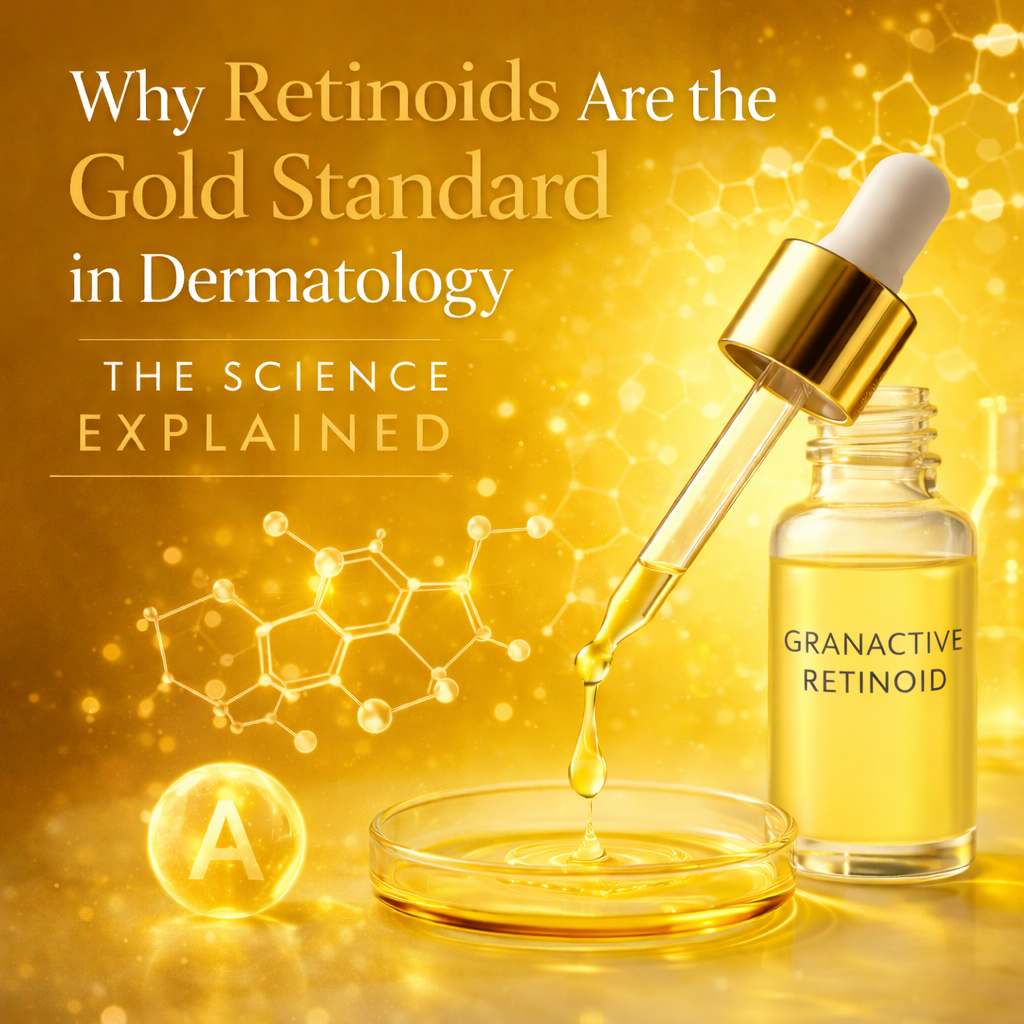
Why Retinoids Are the Gold Standard in Dermatology
Retinoids are widely considered the gold standard in dermatology because they stimulate collagen production and accelerate skin cell turnover. Decades of clinical research show that retinoids can reduce the appearance of wrinkles, improve skin texture, and support healthier skin when used consistently in a long-term skincare routine.
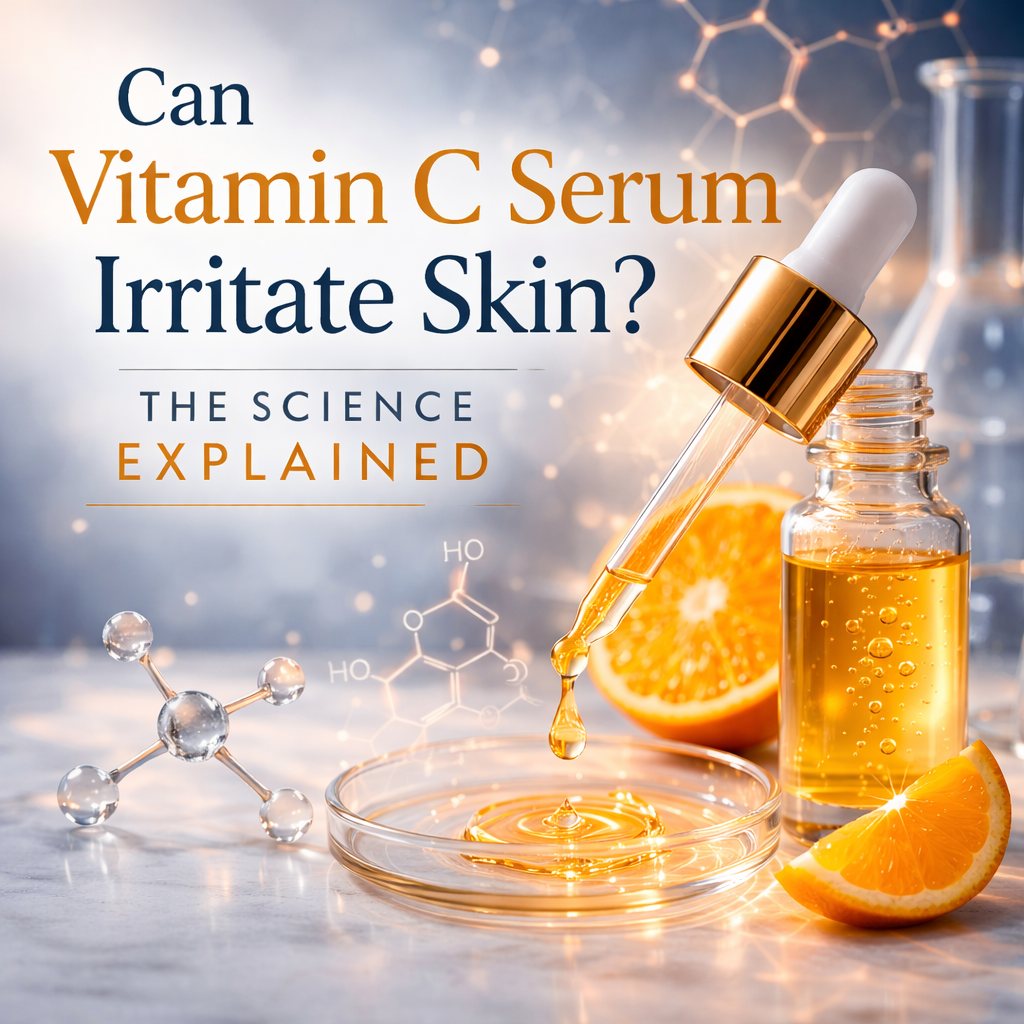
Can Vitamin C Serum Irritate Skin? The Science Explained
Vitamin C serum can sometimes cause mild skin irritation, particularly when used in high concentrations or on sensitive skin. The most active form of Vitamin C, L-ascorbic acid, must be formulated at a low pH to remain effective, which may lead to temporary redness or stinging for some users. Gradually introducing Vitamin C into a skincare routine can help the skin adapt while still benefiting from its antioxidant and collagen-supporting properties.
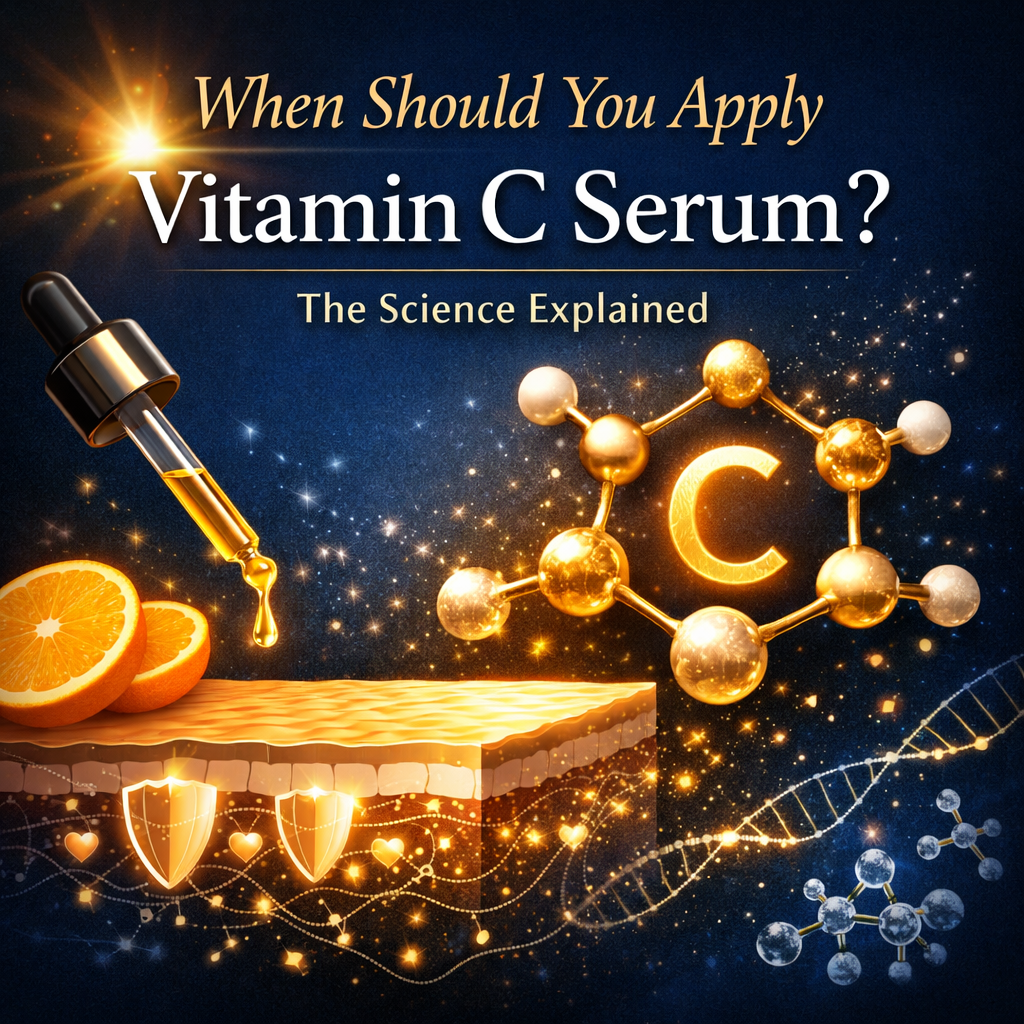
When Should You Apply Vitamin C Serum? The Science Explained
Vitamin C serum is typically applied in the morning after cleansing and before moisturizer and sunscreen. As a powerful antioxidant, Vitamin C helps protect the skin from environmental damage, supports collagen production, and may improve uneven skin tone when used consistently as part of a science-based skincare routine.
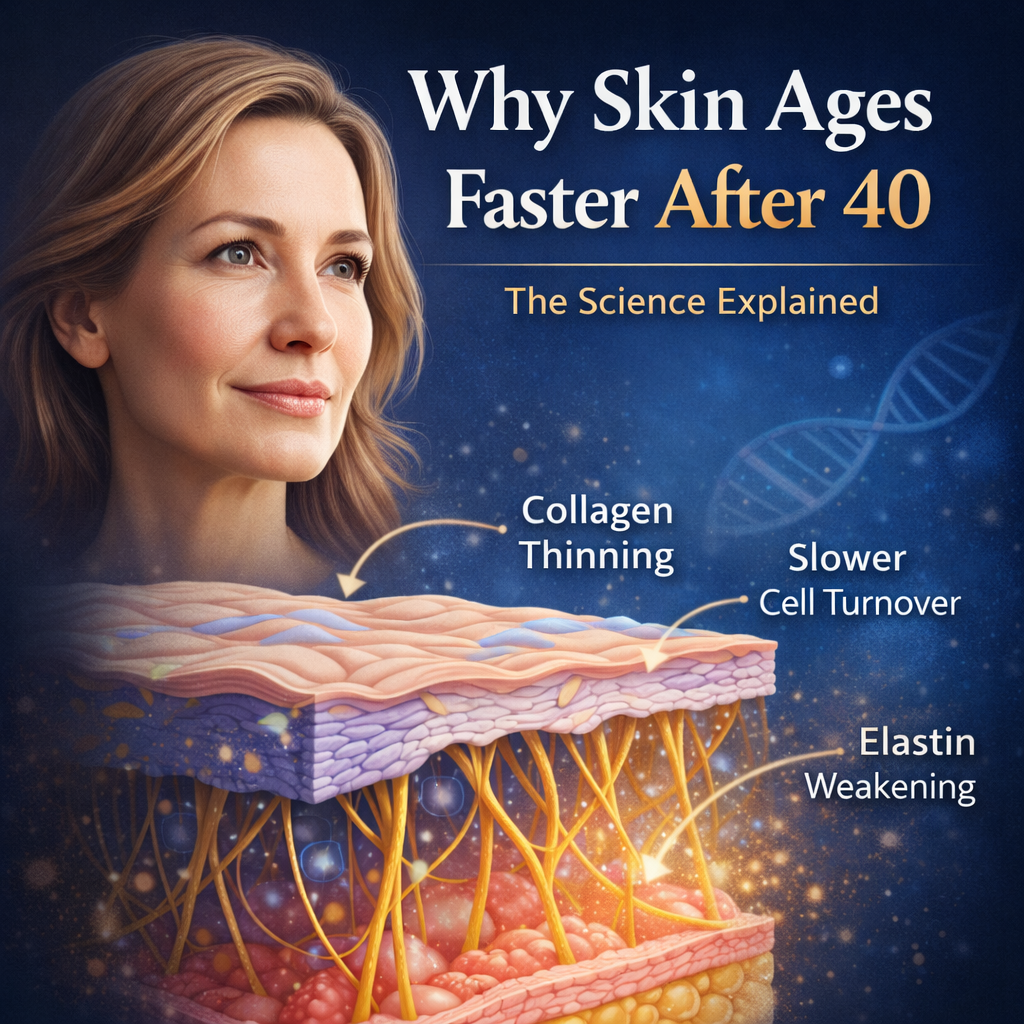
Why Skin Ages Faster After 40: The Science
Skin often appears to age faster after 40 because collagen production declines while skin cell turnover slows and elasticity decreases. Hormonal changes, cumulative sun exposure, and environmental damage contribute to wrinkles and thinning skin, while ingredients such as retinoids, vitamin C, hydration support, and sunscreen can help slow these visible changes.
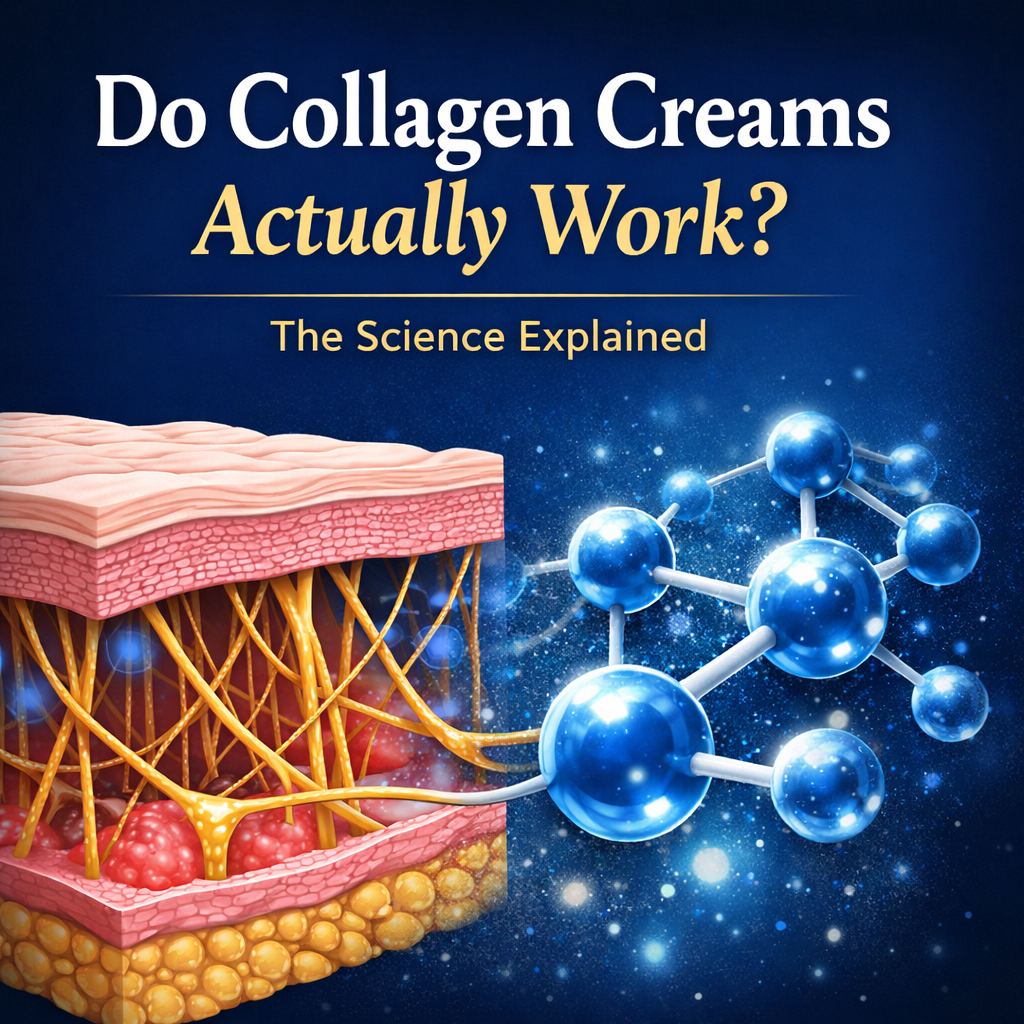
Do Collagen Creams Actually Work? The Science Explained
Collagen creams cannot directly replace collagen in the skin because collagen molecules are too large to penetrate the skin barrier. While these products may improve hydration and temporarily smooth skin texture, dermatology research shows that ingredients such as retinoids, vitamin C, and daily sun protection are more effective for supporting the skin’s natural collagen production.